If you’re a fan of fantasy books, you’ve probably noticed how swords, spears, and other medieval weapons turn up all the time. They’re not just props; these weapons help build the worlds, define the characters, and fuel the drama. There’s a fascinating connection between the real-life weaponry of the Middle Ages and some of the most famous stories in fantasy literature.
The Lasting Appeal of Medieval Weapons in Fantasy
Medieval weapons have a certain cool factor that just never fades, no matter how many centuries go by. When authors started creating early fantasy stories, they naturally looked to the iconic swords, axes, and bows from the Middle Ages for inspiration. It’s not really surprising, as these objects have long been tied to legends and myths. Excalibur, for example, from the Arthurian stories, set the tone for how swords could be symbols of power, destiny, or even magic.
These weapons aren’t just about eye-catching fight scenes. For authors, using medieval arms instantly brings up feelings of adventure, danger, and honor, while giving their stories a timeless quality. Whether it’s a massive twohanded sword or a mysterious dagger, these items help readers imagine a world that’s both ancient and magical. As someone who devours both historical accounts and fantasy novels, I really appreciate how the two blend and influence each other.
The continued popularity of medieval weapons in fantasy signals something deeper: a real human fascination with struggle, honor, and challenge. The design and story tied to each blade or spear can build a sense of history inside a fictional world, making it feel more real. Even readers new to the genre tend to be drawn in by these familiar yet mysterious relics—there’s something special about the clang of steel or the gleam of a well-worn hilt.
The Real-World Inspirations Behind Iconic Fantasy Weapons
Many of the weapons you read about in fantasy stories actually have roots in real medieval designs. Writers often borrow names, shapes, and even the fighting techniques. Take the longsword, with its cross-shaped hilt; it shows up everywhere, from Tolkien’s Middle-earth to the pages of modern epic fantasies. Stuff like crossbows, warhammers, and flails also get plenty of attention, turning up as signature gear for different characters or armies.
Fantasy authors like J.R.R. Tolkien, George R.R. Martin, and Ursula K. Le Guin all clearly studied historical arms before bringing them to life in their books. Tolkien even used real sword names for some of his most memorable weapons, like Sting and Andúril, both of which have roots in old English terms. The difference is that in fantasy, these weapons usually get a magical boost: runes that glow, blades that never dull, or arrows that always find their targets.
Writers sometimes visit museums or read historical texts to get the details right. By tapping into the real weaponry of medieval Europe, Asia, and beyond, they build worlds that feel authentic even when magic is involved. Plus, the connection to real-life battles lets readers instantly connect with the scene—everyone knows what it means to wield a sword or parry with a shield, even if only through books or movies.
How Weapons Shape Fantasy Characters and Worlds
Medieval weapons do a lot more than provide ammunition for epic showdowns. They help shape the personalities and choices of fantasy characters in some memorable ways. That blade a hero picks up is rarely just any old sword; it’s usually tied deeply to who they are or what they stand for. Maybe it’s a family heirloom, a lost artifact, or even an item that brings out their best (or worst) qualities.
Weapons like bows suggest stealth or patience, while axes and clubs tend to go to the big brawlers. Characters are often defined by their choice of weapon. For example, when a main character wields a humble dagger instead of a royal sword, it hints at their background or fighting style. In my own reading, I find it’s those tiny choices that make characters pop off the page.
Sometimes, entire societies in fantasy books develop identities around their main weaponry. An elf tribe might be all about precision archery, while a tribe of mountain warriors swings mighty warhammers. This helps authors build cultures and histories that stretch back for generations—giving every duel or confrontation extra weight. Readers can spot these signals, picking up on details about a character’s origins or culture based just on their weapons and fighting style.
Key Types of Medieval Weapons in Fantasy
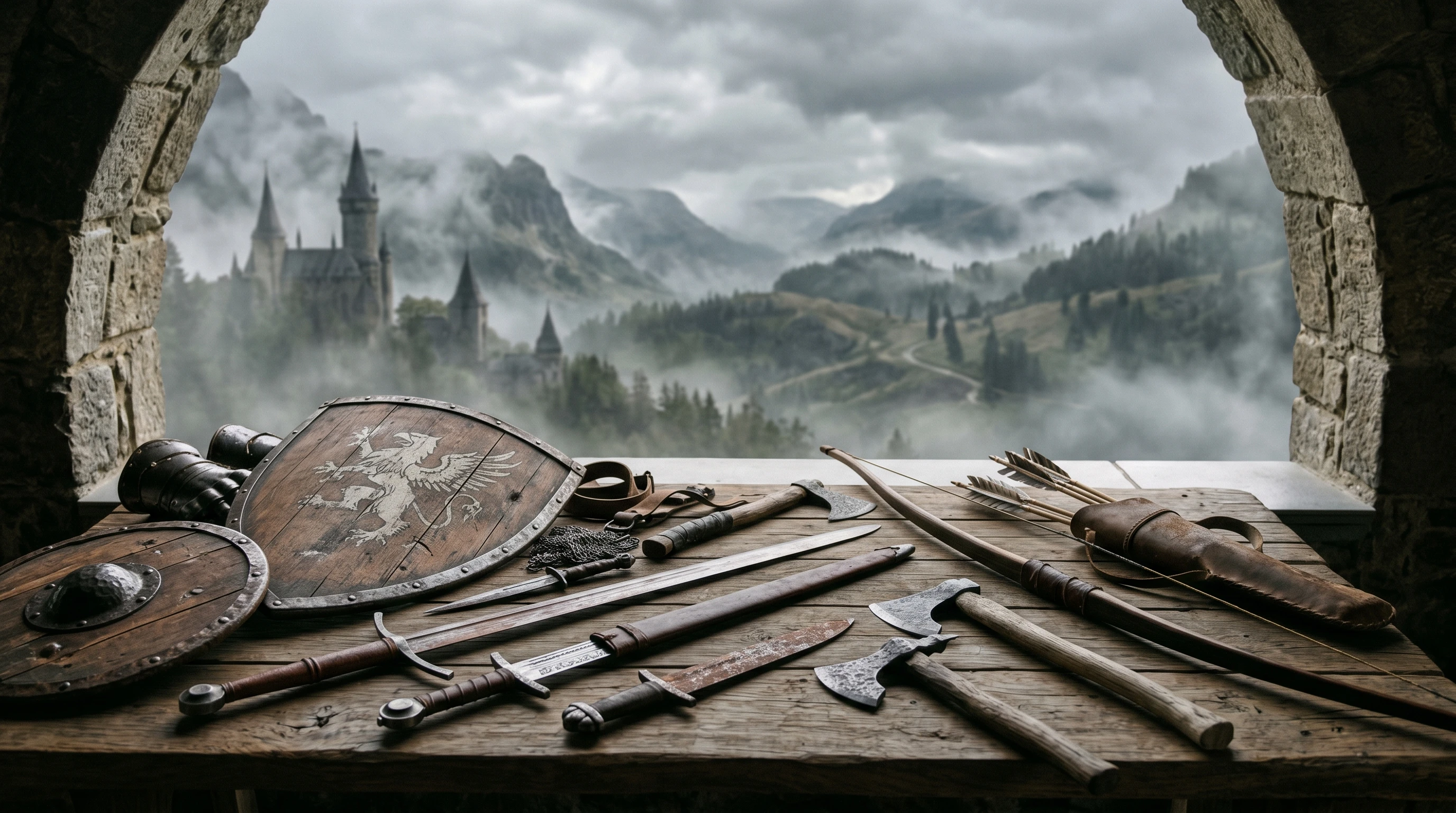
Medieval weaponry in fantasy isn’t just about swords. You get all sorts of gear, each with its own reputation both in real life and in stories. Here are some of the most common ones and why they stand out:
- Swords: The classic choice for heroes and villains alike, swords show up everywhere. Some are slim and knightly, others giant and brutal.
- Axes: Often tied to dwarves or warriors, axes suggest brute force and wild battles.
- Bows: Archers and rangers use these weapons for stealth and longrange attacks.
- Spears and Polearms: Great for formations or monster hunting, these often go to soldiers or monster slayers.
- Daggers: Quick, sneaky, and sometimes enchanted, daggers show up with rogues, spies, or assassins.
- Flails and Maces: Used by clerics or holy warriors in some stories, these weapons have a distinct, fearsome look.
Authors usually use these weapons to help set the tone. When a king draws a sword versus a peasant grabbing a pitchfork, you instantly get different vibes. If you’re curious about how these weapons worked in real battles, there are plenty of resources with details on medieval fighting styles, including documentaries, YouTube channels, and even living history museums that let you see swords and armor up close. Exploring these in real life can give a fresh perspective the next time you read a fantasy battle scene.
Fantasy’s Twist: Magic and Legendary Weapons
One thing that makes fantasy so fun is how it takes historical weapons and turns them up with a magical twist. Swords enchanted to cut through anything, bows that never miss, or shields that create force fields add new layers to the action. These ideas go way beyond what medieval smiths could make. But giving weapons supernatural qualities isn’t just for spectacle; it also deepens the story.
Legendary weapons in fantasy are often tied to big quests, lost heroes, or prophesied events. Think of the One Ring’s power in Tolkien, or Aegon’s sword “Blackfyre” in the Targaryen family legends from George R.R. Martin. These weapons usually come with big expectations, curses, or destinies. As a reader, seeing how a character grows into the weapon’s legacy is one of the most satisfying arcs out there.
Magic weapons let authors play with the rules of physics and fate. Sometimes a blade is the key to summoning ancient creatures or unlocking secret doors. Other times, a cursed weapon tests the hero’s willpower, forcing them to resist its temptations. This blend of history and imagination is a huge part of fantasy’s lasting power. Fans who love armaments get the best of both worlds: authenticity mixed with a healthy dose of the impossible.
Practical Challenges and Creative Solutions for Authors
Writing about medieval weapons isn’t as simple as just naming a sword. Fantasy authors do plenty of homework to describe arms and armor accurately, even if the story itself is pure fiction. Getting details right, like how heavy a sword is, how armor reduces movement, or how long a bow can shoot, matters for readers who love realism. Writers might try wielding replica swords or practicing archery to get a feel for what their characters experience.
There are a few common hurdles that authors run into and ways they work around them:
- Weapon Realism: Not everyone swinging a massive sword would actually be able to use it well. Keeping the weapons believable in size and use helps a story feel grounded, and seasoned readers pick up on the difference.
- Combat Scenes: Choreographing a convincing fight is pretty tough. Many writers study fencing, take martial arts classes, or even ask experts to get the moves right.
- Cultural Variety: Drawing inspiration from different eras and places adds fresh new weapons to the mix; scimitars, chakrams, and early gunpowder tech all set different moods.
- Balancing Magic: If a weapon is too powerful, it risks breaking the story’s tension. Good authors give these objects limits or weaknesses, creating suspense and drama.
It’s a tricky line between accuracy and legend, but when writers get it right, the result is way more immersive and fun. Fantasy worlds where the weapons feel real, but still hold surprises, keep readers hooked through every battle and confrontation.
Beyond the Page: Medieval Weapon Influence in Games and Movies
This inspiration doesn’t stop at books. You’ll see the same fascination with medieval weapons in fantasy movies, tabletop games, and video games. Think of “The Lord of the Rings” movie battles, or how “Dungeons & Dragons” lets you pick gear straight out of a medieval arsenal. These visual adaptations and games give everyone a chance to imagine themselves as part of the action, wielding these famous weapons firsthand.
Video games like “The Witcher” and “Dark Souls” also do a great job of making you feel the weight and drama behind every swing, stab, or block. It’s exciting to see how each medium adds its own twist. Sometimes it’s realistic, while other times it goes over the top, but it’s always creative. The explosion of fantasy-based content in pop culture keeps the love for medieval weapons alive, letting new generations jump into sword-swinging adventures of their own.
Board games, too, make use of these classic arms to set the scene and offer strategic choices. Whether you’re choosing a sword in a deck-building game or painting miniatures for a tabletop battlefield, medieval weaponry brings that immersive, ancient energy to every experience.
Frequently Asked Questions
Question: Why do fantasy books use swords and other medieval weapons so often?
Answer: Swords, bows, and axes are instantly recognizable and help build a world that feels classic, adventurous, and a little bit dangerous. Medieval weaponry also ties in with the legends and myths that inspired early fantasy.
Question: Do fantasy authors research real historical weapons?
Answer: Many do! Researching how weapons were used, what they weighed, and their historical context helps authors write convincing fight scenes and character details, even if the final weapon has magical powers.
Question: Are there fantasy books inspired by weapons from outside Europe?
Answer: Definitely. More authors are branching out into Asian, African, and other cultures’ weaponry, introducing readers to new types of arms that go way beyond what’s in the traditional medieval arsenal. Weapons like the Japanese katana, African throwing knives, or Middle Eastern sabers have all had their moment in fantasy tales, giving fans lots more to explore.
Authors’ Favorite Picks: Cool Medieval Weapons from Fantasy Books
If you’re looking to dig into this topic, here are a few famous weapons from beloved fantasy stories that owe a lot to medieval designs:
- Andúril (“The Lord of the Rings” by J.R.R. Tolkien): A legendary sword reforged from the shards of Narsil, blending real-world sword lore with magical legacy.
- Ice (“A Song of Ice and Fire” by George R.R. Martin): A massive greatsword with echoes of historic twohanded swords used in Europe.
- Dragnipur (The Malazan Book of the Fallen by Steven Erikson): An enchanted sword with a whole mythology behind it.
- The Black Sword (“Elric of Melniboné” by Michael Moorcock): A sentient sword that drinks souls, all based on the aweinspiring edge of legendary blades.
There are plenty more to check out, and each brings its own spin on the mix of history and imagination. If you have a favorite weapon from a book or series, it’s worth tracking down the real-world inspirations behind it—sometimes the story is just as epic as the fiction.
Final Thoughts
Medieval weapons give fantasy literature a serious boost, not just for action, but for storytelling, worldbuilding, and character development. They let writers and readers step into a world where history and myth collide, where every blade can tell a story and every battle feels loaded with meaning.
So next time you see a hero raise their sword or nock an arrow, you’ll know there’s a whole tradition behind that moment. The legacy of medieval weaponry keeps enriching fantasy, letting us all join in adventures where the clank of steel and the echo of legends ring on—both on the page and beyond it.