Shield designs and coats of arms aren’t just decorative; they are filled with symbols and meanings recognized for centuries. I’ve always found these designs fascinating because they hold stories about identity, family history, and cultural values. If you’ve ever been curious about the inspiration and messages behind these powerful images, you’re in the right place.
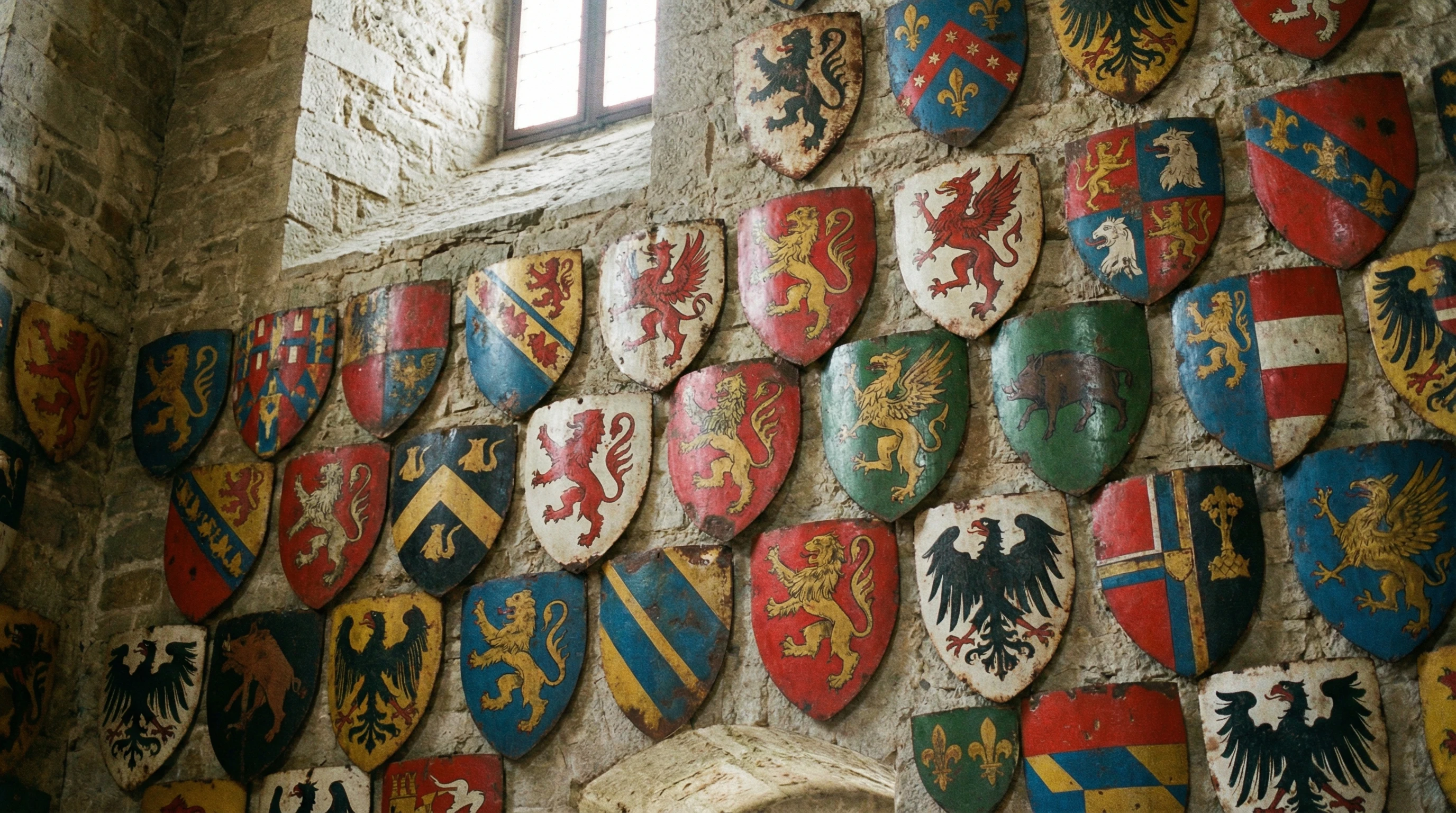
The Origins of Shields and Coats of Arms
The history of shield designs and coats of arms stretches far back, to times when people needed a way to tell friend from foe on chaotic battlefields. Painted symbols and patterns made identification possible in the thick of battle. Over time, these symbols became more complex and eventually turned into coats of arms representing families, regions, and even countries.
Coats of arms began spreading throughout Europe in the 12th century. Knights displayed them on shields, armor, and banners, showing pride, loyalty, and lineage. This practice grew increasingly organized and sophisticated, eventually giving rise to heraldry—the system and study of coats of arms. Today, coats of arms aren’t just about medieval knights; you can see them in city crests, school logos, and even in modern organizations eager to show their heritage.
Common Symbols and What They Mean
Every part of a coat of arms or shield design has meaning that is often passed down across generations. Here are some of the most popular elements you’re likely to spot and what they stand for:
- Lions: Lions typically stand for bravery and courage. Royal and noble families often feature lions to show their power and strength.
- Eagles: Eagles are symbols of vision and authority, and are popular in both European and American heraldry.
- Crosses: These are found on many coats of arms, especially those connected to crusader knights or religious families, representing faith or protection.
- Fleursdelis: This stylized lily is tied to French royalty, symbolizing purity or light.
- Bears, Wolves, and Other Animals: Various creatures highlight traits like ferocity, loyalty, or cunning.
Colors play a big part in heraldry as well. Gold or yellow usually means generosity, while red represents a warrior spirit, and blue is tied to loyalty and truth. Silver or white commonly signals honesty and peace. While these meanings might differ by region, they’re a great starting point if you want to crack the code of a coat of arms.
Understanding Heraldic Structure
Heraldry is not about throwing together eye-catching shapes; there’s a system behind it to keep everything organized and meaningful. A standard coat of arms has several core parts:
- Shield (Escutcheon): This is where most symbols are displayed. The shield can be split into areas called ordinaries, like crosses, chevrons, or bends.
- Crest: Found above the helmet, this decorative part often features a symbol related to the shield. While not all coats of arms include a crest, many noble families do.
- Motto: A phrase, often in Latin, that reflects the family’s values or attitude. Sometimes these are bold and inspiring, like “Fortune favors the brave.”
- Supporters: These figures or animals stand on either side of the shield—think lions, unicorns, or mythical beasts—mostly seen in royal or very old arms.
- Helmet and Mantling: Used to indicate rank and add flair to the overall look.
This structure allows people to quickly get a sense of the meaning and purpose of a coat of arms. Even small choices—like which way an animal faces or what object it holds—can make a difference.
Quick Guide to Interpreting a Coat of Arms
If you’ve come across a shield or crest and want to understand its meaning, start with these quick questions:
- What animals or plants stand out? Most natural elements have established meanings. For instance, an oak tree or an acorn usually signals strength and growth.
- Which colors are most prominent? Heraldic colors, known as tinctures, each have a specific symbolism. Try lining up the main color with traditional meanings.
- Are there repeating shapes (like stripes, crosses, or patterns)? These are called ordinaries or divisions and often relate to certain achievements or values.
- Is there a motto? A motto can offer major clues about the overall vibe and message of the coat of arms.
Asking these questions can help you get an initial understanding, even without checking a detailed heraldry dictionary.
Key Things to Think About When Designing a Modern Coat of Arms
Today, families and organizations still keep the tradition alive by coming up with new coats of arms to express their identity. If you’re planning to make a modern shield design, think about the following:
- Message: Figure out what story or value you want front and center. Are you proudest of resilience, creativity, or something else?
- Keep it Simple: Classic arms use bold, basic shapes, so the design remains easy to read and recognize from a distance.
- Don’t Make it Too Busy: Packing in too many symbols can quickly make the meaning unclear or get lost.
- Colors that Speak: Rely on standard color meanings if you want the design to be easy for others to interpret and feel timeless.
- Personal Meaning: Pick images or symbols that truly resonate with you rather than just what looks interesting.
A thoughtfully designed coat of arms functions as a meaningful, oneofakind logo for any family, school, or business.
Modern Example: University Crests
Universities often develop their own coats of arms, filled with references to their roots and big ideas. Check out popular college crests and you’ll notice symbols pointing to history, values, or famous founders. For example, an open book usually means learning, and a bridge can stand for a connection to a notable landmark nearby.
Military and National Symbols
Military units and countries make strong use of coats of arms in their official emblems. For them, it’s more than show; these symbols unite people under common goals and present a clear identity to others. National symbols like a doubleheaded eagle or a rising sun are full of historical and hopeful references for everyone they represent.
Frequently Asked Questions
People usually have questions when they first check out heraldry or the world of symbolic shields. Here are some I often hear:
What’s the main difference between a shield design and a coat of arms?
Answer: A shield design is mostly the front decoration, while a coat of arms includes everything—the shield, crest, supporters, mottos, and more.
Can anyone design their own coat of arms?
Answer: In most places, yes, as long as you don’t use someone else’s official arms. There are organizations and societies that can help guide you through the process to keep things legit.
Why are animals so common in coats of arms?
Answer: Animals instantly capture qualities families or groups want to highlight, such as courage, wisdom, or loyalty. Plus, people remember them easily.
Are traditional meanings of symbols always the same?
Answer: They usually are, but cultural differences and family stories can add extra meaning. For example, a bear could mean ferocity somewhere and gentle strength somewhere else.
Practical Uses Today
Heraldic symbols and shield designs are still alive in logos, military insignia, government seals, and beyond. Their role in branding and expressing identity hasn’t faded with time. Schools, sports teams, businesses, and other groups continue to use them since they’re quick and effective at showing pride and values.
I’ve noticed local sports clubs often choose eagles or shields for their logos—just like the knights did—to create unity and boost confidence. These longlived symbols clearly have staying power, even in modern communities.
Shield designs and coats of arms do much more than decorate a space. They act as historical records, symbols of identity, and traditions that never fade. Looking deeper into their meanings can help you spot new details in everything from a city’s seal to an old family crest. If you want to design your own or just read the ones you find, remember there’s a story in every color, animal, and motto you see.
Wonderful overview of heraldry and its lasting relevance. I especially enjoyed how you connected medieval battlefield needs to modern logos and institutions, showing that these symbols were never just decoration. The breakdown of animals, colors, and structure makes the topic approachable without oversimplifying it. Your point about simplicity in modern designs really stood out; many people forget that bold, clear imagery is what made coats of arms effective in the first place. I also appreciated the examples of universities, military units, and sports clubs, which prove how deeply these traditions still shape identity today. This post encourages readers to look more closely at crests they see every day and recognize the stories behind them. A fascinating, well-organized read that balances history, symbolism, and practical insight beautifully while remaining engaging and accessible for audiences.
This is a fantastic and well-organized introduction to heraldry! You’ve done a wonderful job of connecting the practical origins on medieval battlefields to the enduring use of these symbols in modern logos, university crests, and sports teams. The breakdown of common symbols (lions for bravery, colors like red for warrior spirit) and the clear explanation of heraldic structure (shield, crest, motto) make a complex topic very approachable. Your practical tips for interpreting a coat of arms and designing a modern one are especially useful. It’s a compelling reminder that these designs are far more than decoration—they are a timeless language of identity and values. Great read!
I really enjoyed this breakdown of the symbolism. I’ve read a bit about the ‘Rule of Tinctures’—the heraldic guideline that prevents placing a ‘metal’ (like gold or silver) on another metal, or a ‘color’ on a color, to ensure high visibility on the battlefield. In your research, did you find that shield designers ever broke these strict rules for symbolic reasons, or was the practical need for visibility always the priority?
That’s an excellent question—and you’re right to frame it as a tension between symbolism and function, because medieval heraldry lived right at that intersection.
Short answer: yes, the Rule of Tinctures was broken—but rarely, deliberately, and usually because of symbolism rather than ignorance. Visibility mattered enormously, but heraldry was never only practical.
First, a quick grounding: what the Rule really was
The Rule of Tinctures (emerging c. 12th–13th century) divides heraldic colors into:
Metals:
Or (gold/yellow)
Argent (silver/white)
Colors:
Gules (red), Azure (blue), Sable (black), Vert (green), Purpure (purple)
The rule:
No metal on metal, no color on color.
The goal was instant recognition—especially:
At a distance
Through dust, rain, or blood
On a chaotic battlefield
Was visibility always the top priority?
Early on? Yes—almost absolutely.
Later? Symbolism, politics, and prestige sometimes overruled it.
Heraldry evolved through three broad phases:
Early heraldry (c. 1100–1250): practicality dominates
In this period:
Heraldry is new
Shields are primary identifiers
Rules are informal but intuitive
Breaking the rule here is extremely rare. If you couldn’t identify someone instantly, you might kill the wrong ally—or fail to rally around your lord.
In this phase, visibility was survival.
High & Late Medieval heraldry (c. 1250–1500): rules solidify—and exceptions appear
This is where your question really comes alive.
Deliberate violations did occur
They usually fell into specific categories:
Canting arms (visual wordplay)
Sometimes symbolism trumped contrast.
Example:
A family name associated with darkness, night, or mourning
Result: color-on-color designs chosen intentionally
These weren’t accidents—they were identity statements.
Sacred or royal symbolism
Certain symbols were considered above normal rules.
The most famous example:
The Kingdom of Jerusalem
Gold crosses on a silver field (metal on metal)
This is one of the clearest, most intentional violations in heraldry.
Why it mattered:
Gold = divine glory
Silver = purity
The symbolism of the Holy City overrode visibility rules
No one mistook this for ignorance—it was a theological statement.
???? Augmentations of honor
A ruler might grant a symbol that broke tincture rules.
In these cases:
Prestige mattered more than clarity
The exception itself signaled royal favor
Breaking the rule could actually draw attention to status.
Late medieval & Renaissance heraldry: battlefield function declines
By this point:
Armor covers shields
Heraldry appears more on banners, surcoats, manuscripts
Recognition comes from standards, colors, and retainers, not just shields
As heraldry becomes more ceremonial:
Rules are still taught
But symbolic, dynastic, or aesthetic choices increasingly bend them
Importantly:
Many “violations” you see today were never meant for combat use in the first place.
A key nuance: “broken rules” were often technical, not reckless
Heralds developed legalistic workarounds:
Furs (ermine, vair) don’t count as metal or color
Charges “proper” (natural colors) bypass the rule
Thin outlines or fimbriation restored contrast
So a design might look illegal to us—but was perfectly acceptable to a trained medieval herald.
So what mattered more—symbolism or visibility?
It depends on context.
On the battlefield:
→ Visibility ruled, overwhelmingly
In dynastic, religious, or political contexts:
→ Symbolism could—and did—override the rule
And crucially:
When the rule was broken, it was usually done consciously, rarely, and meaningfully.
Final takeaway
The Rule of Tinctures wasn’t a rigid law—it was a discipline.
Breaking it was like breaking grammar in poetry:
Clumsy when accidental
Powerful when intentional