Medieval swords come in all shapes and sizes, and their subtle differences can mean a lot for anyone into history, fantasy, or sword collecting. You might think a sword is just a sword, but there’s actually a whole range of types, each with its own purpose and vibe. If you’ve ever wondered what sets a longsword apart from a broadsword, or have no clue what a bastard sword even is, I’m here to give you a clearer picture.
Getting to Know Medieval Swords: Why the Differences Matter
Most people see a sword and imagine a knight on horseback, but there’s a bit more going on under the hood. Over hundreds of years, swordsmiths tweaked designs for all sorts of reasons; better armor, changes in fighting styles, even just what was in fashion. Knowing the types helps make sense of movies, books, or even your favorite video games. It also comes in handy for collectors and reenactors who want their gear to be period-appropriate.
Each category brings something unique to the table, not just in how it looks but also in how it’s used. Some are built for speed and agility, others for power and defense. Here’s an overview of the main sword types you’ll run into if you’re curious about the medieval scene.
The Key Types of Medieval Swords
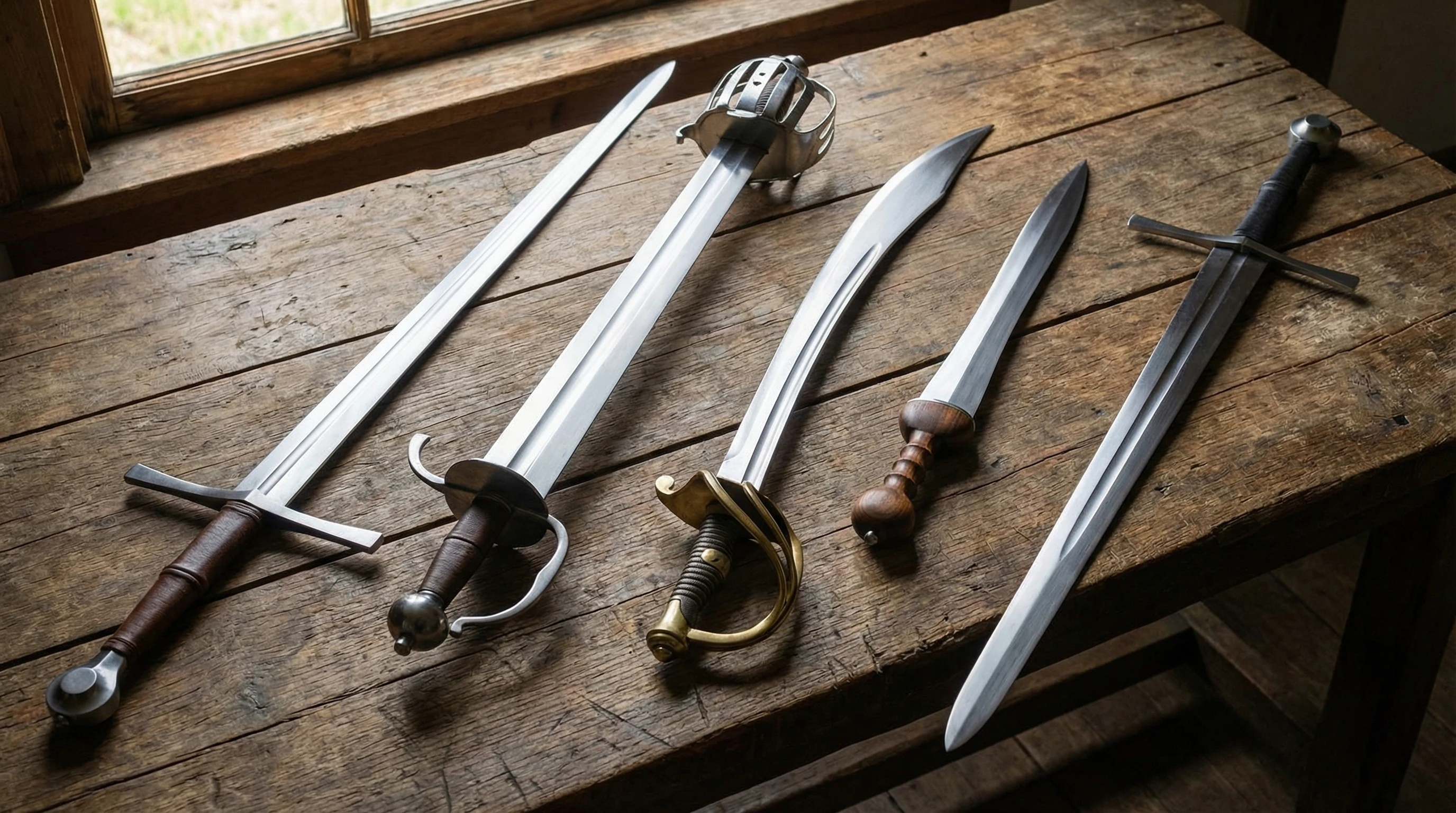
Medieval swords come with their own defining features and story. Here are the big five to get familiar with:
- Longsword
- Broadsword
- Cutlass
- Shortsword
- Bastard sword (Handandahalf)
Subtle Differences Explained: Longsword, Broadsword, Cutlass, Shortsword, Bastard Sword
Longsword
The longsword is probably what most people imagine when thinking “medieval sword.” I see it as the classic knight’s blade; long, double-edged, and typically wielded with two hands, though you can go one-handed in a pinch. Blades usually run about 40 to 48 inches total (with 33 to 40 inch blades fairly common).
These swords have a straight, narrow blade designed for both cutting and thrusting. They’re balanced to allow precise maneuvering, making them popular for armored combat and duels. In movies and shows, anytime you see a knight swinging around a big sword with two hands, you’re probably looking at a longsword.
- Grip: Twohanded, but possible to use with one for close work.
- Blade: Straight, doubleedged, tapered for thrusting and slicing.
- Fighting style: Great for fencing, parrying, and versatile in both offense and defense.
Broadsword
The term “broadsword” gets tossed around a lot, but what sets it apart is the blade profile. The broadsword has a wider blade than the longsword, with more weight and a design focused on chopping and slashing. Typically, these are singlehanded swords used with a shield or buckler.
They’re usually shorter than a longsword, with blade lengths around 30 to 36 inches. The edges are almost always straight, but the blade is flat and pronounced; easy to spot by that wide, almost exaggerated shape.
- Grip: Onehanded, often paired with a shield.
- Blade: Broad (hence the name), doubleedged, heavier and meant for strong cutting blows.
- Fighting style: Best for powerful swings; less agile than a longsword but hits hard when it connects.
Cutlass
Cutlasses have a distinct style you can spot right away; a slightly curved blade, shorter than most other medieval swords, and a protective knuckle guard on the handle. While pirates in movies made these famous, the cutlass does appear toward the medieval to renaissance transition. Sailors liked them for their practicality in close quarters.
The curve is great for slicing, and the sword’s compact size made it easy to use in cramped spots, like on a ship or in dense terrain. It’s not quite as oldschool medieval as the others, but it overlaps enough that it’s worth knowing.
- Grip: Onehanded with a knuckle guard for hand protection.
- Blade: Slightly curved, singleedged, usually about 24 to 30 inches.
- Fighting style: Built for quick, hard chopping; ideal for shipboard fights or fast encounters.
Shortsword
The shortsword is, as the name gives away, shorter than most. Usually between 18 and 24 inches, this sword was easy to handle and a reliable sidearm or backup weapon. Its size makes it good for stabbing in tight spaces and quick singlehanded cuts.
If you’ve seen Roman gladius swords, that’s a close cousin. The medieval shortsword is great for anyone needing something fast, light, and easy to carry. Not necessarily the main weapon in a knight’s arsenal, but really handy for backup or when combat gets close and crowded.
- Grip: Onehanded, sometimes with both hands for extra control.
- Blade: Straight, doubleedged, short and reliable for stabbing or slashing.
- Fighting style: Perfect for closequarters, backup to bigger weapons.
Bastard Sword (Handandahalf Sword)
The bastard sword, sometimes called the “handandahalf” sword, sits in the middle between a longsword and a shortsword. The idea is that you can use it with one hand if you have to, or grip it with both hands for extra power and reach.
Blades are usually in the 35 to 45 inch range. The handle is noticeably longer than on a typical onehanded sword; enough to get your other hand involved when the fight goes from defense to full attack. The balance is friendly to both single and double grip, which made it a favorite when you wanted options.
- Grip: Versatile; one or two hands (hence “handandahalf”).
- Blade: Straight, doubleedged, a little longer and heavier than most singlehanded blades.
- Fighting style: Offers a balance of reach and agility; great for switching up tactics midfight.
Quick Guide: Choosing the Sword That Suits Your Needs
- For Versatility: Go for a longsword or bastard sword; they cover most scenarios and styles.
- For Powerful Cuts: The broadsword is hard to beat for strong, armorcrunching swings.
- For Speed and Agility: Shortswords or cutlasses are a solid pick; easy to carry and quick on the move.
- For Historical Flair: Each sword fits a certain era and social class. Longswords and bastard swords fit knightly traditions, broadswords suit infantry or bodyguards, while cutlasses signal seafaring or mercenary vibes.
What To Think About Before Buying or Collecting Medieval Swords
Whether you’re looking to start a collection or use swords for reenactments, picking the right one really depends on what you want out of it. Here are some tips from my own experience of browsing sword shops and chatting with enthusiasts:
- Purpose: Are you looking for authenticity, something for display, or a practical fencing blade?
- Handling: Try holding a few replicas if you can; weight and balance make a huge difference.
- Material and Build: Real swords should be well-forged with good steel if you plan to use them. Wall hangers can get away with lighter materials.
- Maintenance: Swords need care; regular cleaning and safe storage help keep them in good shape.
Blade Maintenance
A well-made sword will dull or rust if left alone. I always recommend having some oil and a good cloth on hand. Even display swords look better when polished up and cared for.
To keep your blade shining, use a clean, dry cloth after each handling, and avoid touching the blade too much since the oils from your hands can cause rust. For functional blades, a light coat of mineral oil keeps rust away. Remember to check for any signs of nicks or rust spots regularly, especially if your sword is stored in a humid environment. You might also want to store your sword out of direct sunlight or extreme cold to prevent any damage to the steel or hilt materials.
Legal Considerations
Modern laws about sword ownership and carrying can be pretty strict depending on where you live. If you plan to buy an actual sword, doublecheck your local regulations; some places require special permits or have strict rules about storage and public display.
Replica vs. Authentic Swords
If you’re building a collection, there’s a difference between display swords (replicas) and functional swords (battleready or historically accurate). Replicas are often more affordable and lighter, but true enthusiasts will sometimes go after handforged pieces that closely match original designs from museum collections.
Authentic swords, when available, tend to be rare and expensive, often considered historical artifacts rather than collectibles for regular use. Replicas, on the other hand, allow most hobbyists and fans to get a realistic look and feel without the high price tag or fragility of a centuriesold artifact.
How Sword Types Shaped Medieval Battles and Culture
Sword choice wasn’t just about personal taste; it had a big impact on how knights and soldiers trained, fought, and even how they were seen in society. For example, the longsword’s reach worked really well against armored foes, while broadswords packed a punch for getting through lighter armor or against foot soldiers.
The type of sword carried could even say a lot about a person’s rank and role. Bastard swords pointed to adaptability on the battlefield, while cutlasses hinted at travel and adventure. Each sword came with its own cultural baggage, and knowing a bit about them brings medieval stories to life.
Medieval artworks and manuscripts often showed warriors with their preferred swords, which gives modern historians clues about the evolution of warfare. The rise of specialized sword schools during different periods also matched the variations in sword types. In some cultures, carrying a certain sword style became a mark of status—nobles, knights, and even pirates had their own symbolic blade. Over time, legends and stories grew around these weapons, helping them leave a lasting mark on pop culture and fiction, long after their practical use in battle faded.
Frequently Asked Questions
Curious about something that hasn’t come up yet? Here are a few common questions I hear about swords:
Question: Is there really that much difference between a longsword and a broadsword?
Answer: Yes, mainly in blade width, grip, and how they’re used. Longswords are more about reach and technical fencing, while broadswords focus on powerful, broader swings.
Question: What do people mean by “handandahalf” sword?
Answer: That’s another name for the bastard sword, which can be wielded with one or two hands, depending on what the fight calls for. Think of it as the inbetween option.
Question: Can I buy a real medieval sword?
Answer: Absolutely; there are lots of reputable sword makers and historical replica shops. Just check your local laws first if you’re planning to have one shipped to your home.
Final Thoughts on Medieval Sword Types
Digging into the subtle differences between the main medieval swords helps make history, TV, and reenactments way more interesting. Each type—longsword, broadsword, cutlass, shortsword, and bastard sword—has its own story and set of perks. Whether you’re thinking about picking one up for your collection or just want to impress others with some fun facts, these key points will help you feel a little more like a knight in shining armor.