The history of medieval swords is pretty fascinating, and it’s way more than just a story about sharp blades and famous battles. Swords changed dramatically between the Viking Age and the late Middle Ages, not just in appearance but in how people used them, how they were made, and even what they stood for. If you’re into history or just enjoy exploring cool old weapons, following how swords evolved with society feels almost like piecing together an ancient jigsaw.
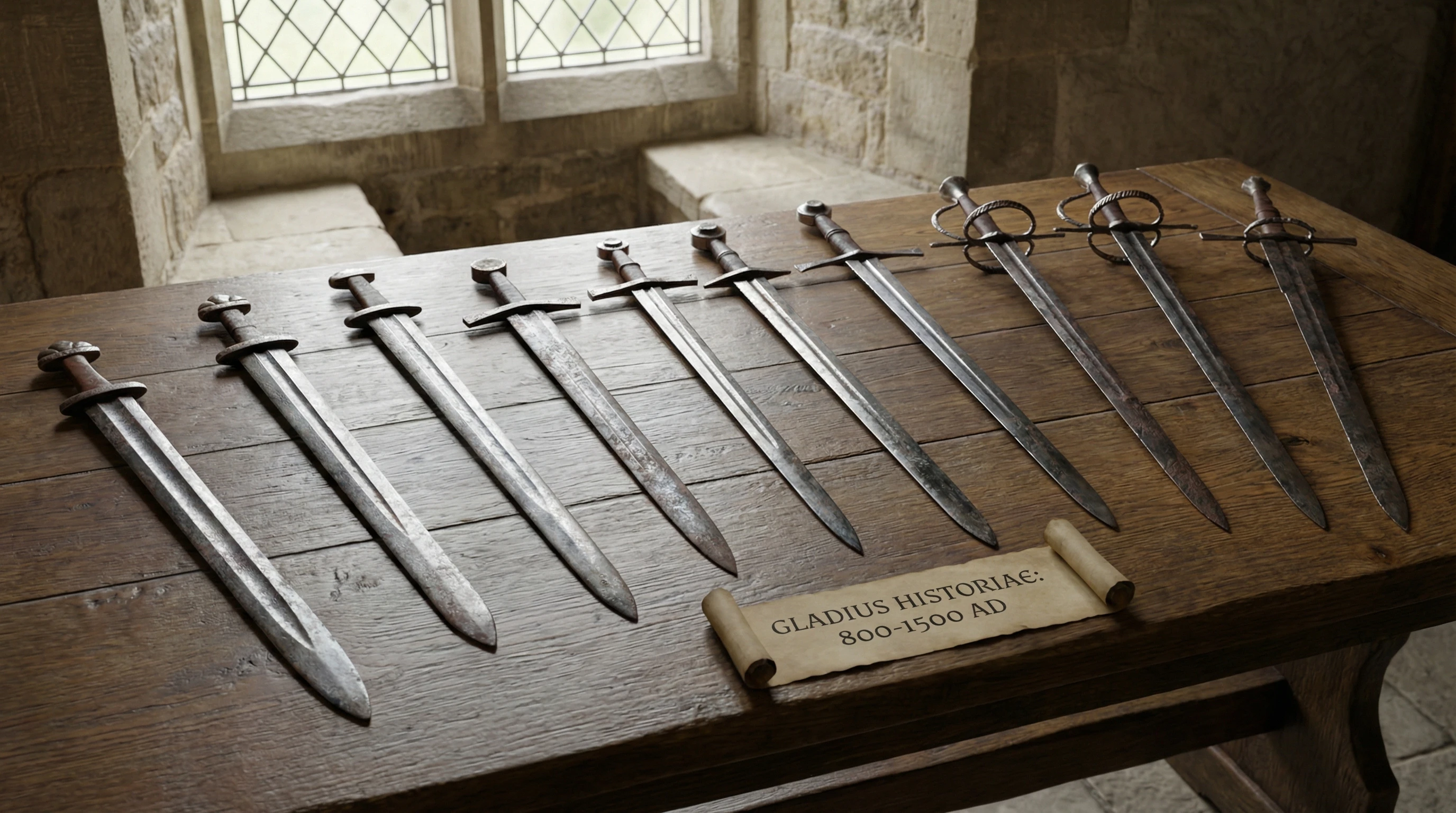
The Early Medieval Sword: Viking Age Blades
When most folks picture a “Viking sword,” they’re probably imagining a classic onehanded blade with a straight double edge and a simple crossguard. These swords, usually called Viking swords (or Carolingian swords if you’re thinking about mainland Europe), were actually awesome descendants of Roman design. Blacksmiths crafted them with a wide, flat blade, about 30 to 36 inches long, perfect for hacking, slashing, and the occasional thrust.
The handle (or grip) was short since Viking warriors fought with one hand—the other held a shield. The pommel at the end, often shaped like a knob or lobes, helped balance the sword and kept it steady during swings. Although Viking warriors loved showing off with decorated hilts and patternwelded blades, these swords didn’t go wild in shape. What set them apart was durability and solid construction. The technology for their day was impressive, using layers of iron and steel for both toughness and flexibility.
Viking swords fit perfectly with a battle style relying on heavy blows and shield defense. The vibe went beyond fighting; these swords were family treasures and status symbols, sometimes even legendary. Swords like the famous Ulfberht, with their name inlaid on the blade, were highly prized and often passed down through generations.
Viking swords also reflected cultural values. They showed that their owner was skilled, respected, and well equipped. Sometimes, swords were buried with their owners as a last mark of status, while others were broken and offered as tribute.
Sword Development in the High Middle Ages
As Europe moved into the 11th and 12th centuries, swords underwent major changes. This was partly thanks to improvements in armor and the way wars were fought. Mail armor got denser, soldiers moved in tighter groups, and new battlefield challenges called for smarter sword design.
- Broader and TipHeavy Blades: Swords grew longer, and heavier in some cases. The blades got stiffer, making them better for both cutting and thrusting. Some swords picked up sharper points to poke through armor gaps, not just for wild swings.
- Longer Grips and TwoHanded Swords: The traditional Viking grip gave way to extended handles. Sometimes knights needed two hands for more power and control, sparking the arrival of the handanda-half bastard sword—useful for when you had to add muscle.
- Crossguards: The crossguard grew wider and thicker, offering more protection for the hand during scuffles or duels, a big advantage on the chaotic battlefield.
Knights on horseback were now the rock stars of military style, and swords became more than just weapons—they were symbols of status, honor, and devotion. Swords even started to appear in ceremonies, on family crests, and in art, shining a light on their new role in society.
Late Middle Ages: The Age of the Longsword and Combat Innovation
The late Middle Ages brought thicker plate armor and evolving battle tactics. Blacksmiths didn’t just keep up; they pushed swordmaking to the nextlevel cool. By the 14th and 15th centuries, the longsword—sometimes called the arming sword or knightly sword—ruled the scene.
Longswords featured straight doubleedged blades, usually about 40 to 46 inches in total length. The longer grip was great for swinging with two hands, making strong cuts and precise thrusts easier. Blades also became slimmer and more pointed, able to slip through gaps in plate or mail armor. The fuller—a groove running down the blade—kept the sword light without losing strength.
- Bastard Sword/HandandaHalf Sword: This versatile sword could be used in either one or two hands, depending on what the situation demanded. Knights appreciated being able to quickly switch up their fighting style, adapting in the heat of battle.
- Greatsword/Claymore: These large twohanded swords, like the Scottish claymore and German zweihander, became iconic for their size and impact. While not every warrior could wield them, in experienced hands they could break through pike lines and swing the battle’s momentum.
New techniques also took hold, such as halfswording (gripping the blade for control in close combat) or using the pommel to jab an opponent. The sword was now central to a broader toolkit for fighting armored foes. Blacksmiths took pride in finer craftsmanship, superior steel, expert tempering, and sometimes showstopping decoration.
As the Middle Ages closed out, swords were no longer just about martial power—they had become iconic in literature, ceremonies, and legends, forging connections between history, myth, and identity.
Key Parts of a Medieval Sword and Why They Matter
When someone mentions a “medieval sword,” they’re usually talking about much more than just the blade. Each piece serves a specific function. Here’s what I keep in mind when checking out swords or studying replicas:
- Blade: Its shape and length set the tone for how the sword handles. A broad blade is best for chopping, while a narrow one excels at thrusting.
- Fuller: Those grooves help lighten the blade and boost its strength. Despite the myth, they’re not for blood—they just make swinging less tiring.
- Crossguard: Shields your hand and can trap an enemy’s blade in a close-quarters fight.
- Grip: Comfort and control are key. The best length depends on whether you’re fighting with one or two hands.
- Pommel: Balances the whole sword and, for larger weapons, makes maneuvering much easier. In a pinch, it could even be a close-range weapon.
As sword designs evolved, these elements came together in different ways to suit each era’s fighting style and the technology available to blacksmiths. This made each generation of swords unique and tailored to the issues they needed to solve.
What Drove Sword GlowUp?
Blacksmiths didn’t create new swords out of nowhere. Innovations almost always came as a response to fresh challenges in warfare and society. Here’s what fueled the switchups:
- Armor Improvements: As mail armor gave way to full plate, sword tips had to get harder and sharper. It was actually easier to knock someone down in armor than to slice them open, so piercing attacks became a focus.
- Battlefield Tactics: Soldiers fighting in groups or tight lines needed weapons that could switch between cutting, stabbing, and blocking, leading to new shapes and styles.
- Advances in Blacksmithing: Better forges and access to higher quality steel expanded what smiths could create, controlling tempering and hardness with more precision.
- Symbolic Power: By late medieval times, a sword truly showed off its owner’s status, rank, and sometimes religious faith. The sword’s meaning went well beyond combat.
The freedom to experiment allowed swordmakers to push boundaries and respond to whatever came next on the battlefield.
Common Questions About Medieval Swords
Here are some things people often wonder when they check out a medieval sword at a museum or see one in an epic movie:
Question: Were Viking swords really better than medieval longswords?
Answer: Not really—they were just crafted for different times. Viking swords were awesome for shieldandaxe brawls, while longswords were designed for plate armor and changing fighting tactics.
Question: What made a sword valuable back then?
Answer: Good steel, topnotch blacksmithing, and sometimes flashy decoration. Some swords became legendary just by being exceptionally well crafted and lasting for generations.
Question: How heavy were these swords?
Answer: Not as heavy as you might think! Viking swords generally weighed between 2 and 4 pounds, and even large longswords rarely went over 4 pounds. Thanks to smart balancing, skilled warriors didn’t struggle swinging them.
Question: Did all knights use the same type of sword?
Answer: Definitely not. Swords varied widely across regions and personal taste. Knights picked out styles, hilts, and blade shapes that matched their fighting style and budget, resulting in tons of unique combinations.
Practical Uses and Lasting Legacy
Looking into medieval swords isn’t just about weapons—it’s also about how people adapted their tools to survive, defend themselves, and signal their place in society. Today, sword designs show up in modern fencing, martial arts, movies, and collectibles. Craftsmen and enthusiasts work hard to build accurate replicas and breathe life into lost techniques. Museums now often offer handson programs, letting visitors try swinging or handling swords to really get a feel for their balance, weight, and sharpness.
The saga of the medieval sword teaches us about adapting technology, making things both practical and attractive, and expressing personal achievement through everyday objects. If you want a taste of that history, consider checking out a reenactment event, wandering through a quality arms museum, or joining a historical fencing club. It’s a satisfying way to connect with the past and keep those stories alive in the present.
Excellent breakdown of how medieval swords evolved alongside armor, tactics, and culture. I liked how you highlighted Viking blades as durable, family heirlooms rather than crude weapons, especially the mention of Ulfberht swords. The transition into the High Middle Ages was clearly explained, showing why longer grips, stronger tips, and wider guards became necessary on crowded battlefields. Your section on longswords and late medieval techniques like half-swording really captures how sophisticated swordplay had become. I also appreciated the focus on balance and weight, which corrects common myths about swords being heavy and clumsy. This article does a great job connecting craftsmanship, battlefield needs, and symbolism into one story. It’s engaging for beginners while still offering depth for history enthusiasts who enjoy understanding how technology and warfare shaped each other across centuries of conflict and innovation in Europe and beyond overall clearly presented.
This is an excellent and well-structured overview of sword evolution! You’ve done a fantastic job of connecting the changes in blade design, from the Viking Ulfberht to the late medieval longsword, directly to the practical needs of the battlefield—like improvements in armor and shifting combat styles. The explanations of key features (like the purpose of the fuller or the development of hand-and-a-half grips) are clear and really help demystify how these weapons worked. I especially appreciated how you highlighted that these weren’t just crude tools but sophisticated pieces of technology and powerful cultural symbols. It’s a compelling journey from the shield-wall to the age of plate armor, perfect for both newcomers and history enthusiasts. Great read!
I’ll admit, I’m a total novice when it comes to history, but this was a fascinating read! Looking at the shift from Viking blades to those massive two-handed swords, I have to ask a ‘beginner’ question: How heavy were these actually? In movies, they look like they weigh 50 pounds, but I imagine a soldier would get exhausted in minutes. Was there a specific point in history where the swords became ‘too big’ for a normal person to actually use effectively?
Short answer: real swords were much lighter and more practical than they look, and there was never a point where mainstream battlefield swords became “too big” for normal people to use.
Here are some realistic averages based on surviving originals:
Viking Age swords (c. 800–1100)
Weight: ~2.2–3 lbs (1–1.4 kg)
Grip: One-handed
Use: Slashing and quick cuts with a shield in the other hand
These were nimble weapons designed for fast, repeated strikes—not brute force.
High Medieval arming swords (c. 1100–1300)
Weight: ~2.5–3 lbs
Grip: One-handed (with shield or buckler)
Use: Balanced cutting and thrusting
Still very light, and often better balanced than earlier blades.
Longswords / hand-and-a-half swords (c. 1300–1500)
Weight: ~2.8–3.5 lbs
Grip: One or two hands
Use: Precise cuts, thrusts, grappling, half-swording
Despite being longer, they’re not heavier—balance shifts closer to the hilt, making them surprisingly agile.
True two-handed swords (Zweihänder, c. 1500s)
Weight: ~4–6 lbs (rarely more)
Grip: Two hands only
Use: Breaking pike formations, battlefield control
These look monstrous, but they’re still nowhere near movie weights.
So… were swords ever “too big”?
For regular soldiers? No.
If a sword was issued or commonly used in war, it had to be:
Carried all day
Used repeatedly under stress
Effective while wearing armor
Anything truly unwieldy would be abandoned quickly—and armies are ruthless about what works.
The “too big” swords you’ve seen are usually:
Ceremonial swords
Executioner’s swords
Parade weapons
Fantasy props or wall-hangers
These weren’t meant for battlefield use.
Why movies get it wrong
Films exaggerate size and weight because:
Bigger = more visually dramatic
Slow, heavy swings read better on camera
Actors aren’t trained in historical swordsmanship
Real medieval combat emphasized speed, endurance, leverage, and control, not wild overhand chops.
A useful comparison
A typical medieval sword:
Weighed about as much as a modern laptop
Balanced like a well-made hammer
Could be used for hours, not minutes
If swords really weighed 40–50 pounds, swordsmanship as a martial art wouldn’t exist—and we have hundreds of surviving manuals showing just how athletic and technical it was.